
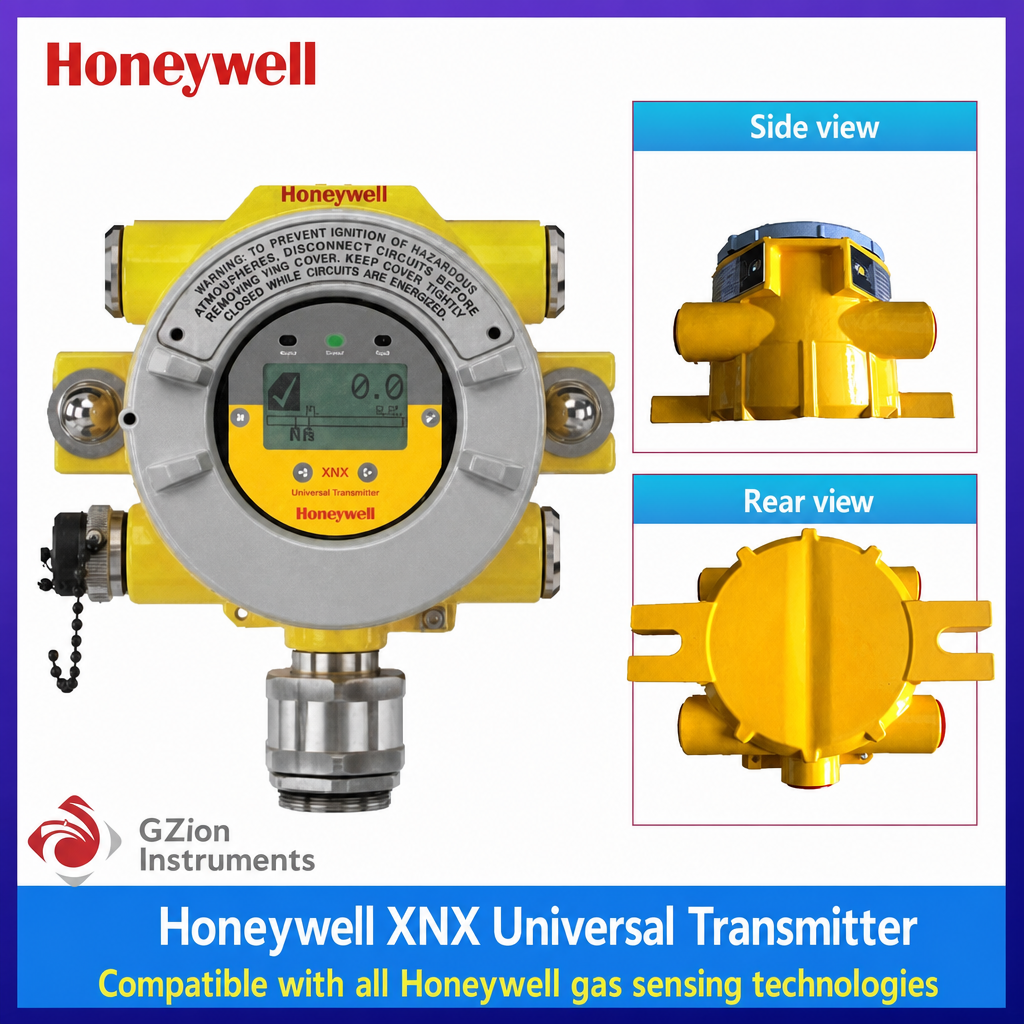
| Item | Value |
|---|---|
| Measured gases | H2 hydrogen, CO carbon monoxide, CS2 carbon disulfide, NO nitric oxide, CL2 chlorine, O3 ozone, LEL flammable & toxic gases |
| Measuring range | 0-100ppm |
| Detection principle | catalytic combustion、electrochemical |
| Accuracy | |
| Resolution | |
| Response time | |
| Ingress protection | |
| Explosion protection | |
| Operating temperature | -40ºC ~ +65ºC |
| Power supply | |
| Output signal |
Honeywell Launches XNX Flammable Gas and Toxic Gas Detectors Using Honeywell's comprehensive sensor technology for analyzing "toxic and flammable gases – including catalytic combustion, electrochemical and infrared. The XNX also works with all major industrial communication protocols, including HART (standard) and Modbus (optional).
The XNX is designed to help prevent toxic and flammable gas in petrochemical and industrial environments, including exploration and drilling platforms, production platforms, onshore oil and gas terminals, refineries and chemical plants, power plants, wastewater treatment facilities and utilities for people, property and environmental plants.
The XNX housing is made of stainless steel or aluminum and features marine high-grade paints. Five-threaded ports, available in metric or NPT versions, and rugged mounting options provide ultimate installation flexibility. Various sensing technologies built-in instruments can be connected to local transmitters or corresponding accessories remotely. The internal components of the XNX are designed to facilitate digital communication and sensor connection to the unit while protecting against hazardous electrical misconnections. Pending UL, CSA and hazardous locations, IP66 rated for dust/water ingress protection, and SIL2 functional safety explosion protection requirements, XNX flammable gas and Toxic gas detectors serve demanding industrial environments.
The XNX user interface provides support for alarms, faults, and configurations via large dot matrix displays and LED indicators. Icons supported by seven languages are designed to ensure ease of operation around the world. The HART protocol is available with a standard 4 - 20mA output and an optional local HART adapter configuration and use in existing diagnostic HART handheld devices. The XNX can also be equipped with options with remote reset, or Modbus digital interface, to meet the needs of the most complex installations and fault alarm relays, etc. Foundation fieldbus interfaces are also under development. The XNX is seamlessly installed into a digital communication network with other safety equipment connected to it, such as fire protection systems, alarm flashes and cameras. The device descriptor is registered with the HART Communications Foundation, ensuring fully compatible operation.
With XNX and support for sensing technology, almost all gases in the oil and gas industry can be detected in a single platform system.
The XNX universal variant feeder marks a new shift from Honeywell detector Ltd. to gas detection. It supports a wide variety of sensors on common platforms, providing modular options for inputs and outputs.
The XNX is designed to ensure flexible integration, simple installation, user-friendly operation, and easy maintenance. It is ideal for use in a wide range of gas detection controllers or industry-standard PLCs. If you use Honeywell detector GmbH gas monitoring solutions, you are protected no matter the situation.
XNX's modular designer, Honeywell detector GmbH, offers cost-effective solutions to meet the needs of a wide range of gas tarines.
With XNX you don't need to add additional controllers, junction boxes, relays, monitors, and other additional equipment.
If you are looking for a fully integrated monitoring and safety solution in your plant, the XNX Universal Gas Transmitter is the perfect choice.
The XNX universal gas transmitter offers the following advantages:
|
Ease of use
• Compatible with different Honeywell gas sensors
• Select sensor technology for each application
• Supports a variety of standard industrial signal outputs
• XNX gas detector can be adjusted to meet field needs
• Future-proof design with the addition of a new standard signaling universal transmitter platform
• Simplify and reduce installation costs
• Save time and money on training
• Fewer false alarms
• Fewer mishandling
• Reduce the types of spare parts, reduce inventory pressure and maintenance costs
Easy to use
• Local or remote sensor mounting options
• Three-wire system 4-20mA (source current, leakage current optional) and four-wire system
• Standard HART communication protocol
• LED status display
Save on running costs
• Non-intrusive single-person magnetic stick operation can complete all configuration, calibration and testing functions
• No fire permit required
• Hot-swappable oxygen and toxic gas sensors
• Internal detection unit with replaceable catalytic combustion and infrared sensors
• Automatic suppression during maintenance
Easy to install
• Integrated mounting base plate for wall mounting, optional tubing, ceiling and duct mounting accessories
• 5 x M25 or 3/4" NPT electrical interfaces
• POD module can be removed during installation to provide enough space for wiring
• Pluggable terminal blocks for easy wiring
Use:High-spec general-purpose transmitters are widely used on Honeywell Analytics local or remote gas detectors to detect flammable, toxic gas, and oxygen gas hazards. XNX Toxic gas detectors are suitable for use in Zone 1 and 2 hazardous areas, and in North America for hazardous areas: Class I and II, Division 1 or 2
Material:: Shipbuilding process 5 layers of painting LM25 aluminum alloy or 316 stainless steel
weight: LM25 aluminum alloy: 2.8kg; 316 stainless steel: 5kg
Installation: Integrated installation of the base plate; Optional tube mounting bracket, suitable for pipe diameter of 100mm-150mm; Optional ceiling mounting brackets, optional air duct mounting brackets
Cable entry: 5 electrical interfaces/cable inlets - (2 right, 2 left, 1 bottom) with inlet size ATEX/IECEx standard M25 or UL/CSA certified 3/4" NPT
Size::160mm x197mm x114mm
IP rating:IP66 EN60529:1992. NEMA 4X
Operating temperature:-40ºC ~ +65ºC
Operating humidity: 0-99%RH (non-condensing)
Operating pressure:90-110kPa
Storage environment: -40ºC ~ 75ºC , 0~99% non-condensing
• Oil and gas production platforms
• Exploration and extraction of oil and gas
• Refineries
• Petrochemical plants
• Onshore oil and gas terminals
• Gas delivery
• Power stations
Pick personality first: MPD catalytic/IR uses mV, Optima/Excel uses IR, toxic/O₂ uses EC. NNN is a transmitter body; CB1/IV1/IF1/IC1 ship with an MPD head. Then enclosure (aluminium vs 316SS), approval (ATEX M25 vs UL NPT) and comms (relays / Modbus / FFB). Open the SKU page.
Honeywell XNX part-number matrix (filterable)
| P/N | Pers. | Gas | Range | Cert | Body | Option |
|---|---|---|---|---|---|---|
| XNX-AMAV-NNNNN | mV | body | — | ATEX | Aluminium | HART |
| XNX-AMAV-NNCB1 | mV | LEL | 0–100 %LEL | ATEX | Aluminium | HART |
| XNX-AMAV-NNIF1 | mV | C₃H₈ | 0–100 %LEL | ATEX | Aluminium | HART |
| XNX-AMAV-NNIV1 | mV | CH₄ | 0–100 %LEL | ATEX | Aluminium | HART |
| XNX-AMAV-NNIC1 | mV | CO₂ | 0–5 %v/v | ATEX | Aluminium | HART |
| XNX-AMAV-NHNNN | mV | body | — | ATEX | Aluminium | HART |
| XNX-AMAV-NHCB1 | mV | LEL | 0–100 %LEL | ATEX | Aluminium | HART |
| XNX-AMAV-NHIF1 | mV | C₃H₈ | 0–100 %LEL | ATEX | Aluminium | HART |
| XNX-AMAV-NHIV1 | mV | CH₄ | 0–100 %LEL | ATEX | Aluminium | HART |
| XNX-AMAV-NHIC1 | mV | CO₂ | 0–5 %v/v | ATEX | Aluminium | HART |
| XNX-AMAV-RNNNN | mV | body | — | ATEX | Aluminium | Relays |
| XNX-AMAV-RNCB1 | mV | LEL | 0–100 %LEL | ATEX | Aluminium | Relays |
| XNX-AMAV-RNIF1 | mV | C₃H₈ | 0–100 %LEL | ATEX | Aluminium | Relays |
| XNX-AMAV-RNIV1 | mV | CH₄ | 0–100 %LEL | ATEX | Aluminium | Relays |
| XNX-AMAV-RNIC1 | mV | CO₂ | 0–5 %v/v | ATEX | Aluminium | Relays |
| XNX-AMAV-RHNNN | mV | body | — | ATEX | Aluminium | Relays |
| XNX-AMAV-RHCB1 | mV | LEL | 0–100 %LEL | ATEX | Aluminium | Relays |
| XNX-AMAV-RHIF1 | mV | C₃H₈ | 0–100 %LEL | ATEX | Aluminium | Relays |
| XNX-AMAV-RHIV1 | mV | CH₄ | 0–100 %LEL | ATEX | Aluminium | Relays |
| XNX-AMAV-RHIC1 | mV | CO₂ | 0–5 %v/v | ATEX | Aluminium | Relays |
| XNX-AMAV-MNNNN | mV | body | — | ATEX | Aluminium | Modbus |
| XNX-AMAV-MNCB1 | mV | LEL | 0–100 %LEL | ATEX | Aluminium | Modbus |
| XNX-AMAV-MNIF1 | mV | C₃H₈ | 0–100 %LEL | ATEX | Aluminium | Modbus |
| XNX-AMAV-MNIV1 | mV | CH₄ | 0–100 %LEL | ATEX | Aluminium | Modbus |
| XNX-AMAV-MNIC1 | mV | CO₂ | 0–5 %v/v | ATEX | Aluminium | Modbus |
| XNX-AMAV-MHNNN | mV | body | — | ATEX | Aluminium | Modbus |
| XNX-AMAV-MHCB1 | mV | LEL | 0–100 %LEL | ATEX | Aluminium | Modbus |
| XNX-AMAV-MHIF1 | mV | C₃H₈ | 0–100 %LEL | ATEX | Aluminium | Modbus |
| XNX-AMAV-MHIV1 | mV | CH₄ | 0–100 %LEL | ATEX | Aluminium | Modbus |
| XNX-AMAV-MHIC1 | mV | CO₂ | 0–5 %v/v | ATEX | Aluminium | Modbus |
| XNX-AMAV-FNNNN | mV | body | — | ATEX | Aluminium | FFB |
| XNX-AMAV-FNCB1 | mV | LEL | 0–100 %LEL | ATEX | Aluminium | FFB |
| XNX-AMAV-FNIF1 | mV | C₃H₈ | 0–100 %LEL | ATEX | Aluminium | FFB |
| XNX-AMAV-FNIV1 | mV | CH₄ | 0–100 %LEL | ATEX | Aluminium | FFB |
| XNX-AMAV-FNIC1 | mV | CO₂ | 0–5 %v/v | ATEX | Aluminium | FFB |
| XNX-AMAV-FHNNN | mV | body | — | ATEX | Aluminium | FFB |
| XNX-AMAV-FHCB1 | mV | LEL | 0–100 %LEL | ATEX | Aluminium | FFB |
| XNX-AMAV-FHIF1 | mV | C₃H₈ | 0–100 %LEL | ATEX | Aluminium | FFB |
| XNX-AMAV-FHIV1 | mV | CH₄ | 0–100 %LEL | ATEX | Aluminium | FFB |
| XNX-AMAV-FHIC1 | mV | CO₂ | 0–5 %v/v | ATEX | Aluminium | FFB |
| XNX-AMAI-NNNNN | IR | body | — | ATEX | Aluminium | HART |
| XNX-AMAI-NHNNN | IR | body | — | ATEX | Aluminium | HART |
| XNX-AMAI-RNNNN | IR | body | — | ATEX | Aluminium | Relays |
| XNX-AMAI-RHNNN | IR | body | — | ATEX | Aluminium | Relays |
| XNX-AMAI-MNNNN | IR | body | — | ATEX | Aluminium | Modbus |
| XNX-AMAI-MHNNN | IR | body | — | ATEX | Aluminium | Modbus |
| XNX-AMAI-FNNNN | IR | body | — | ATEX | Aluminium | FFB |
| XNX-AMAI-FHNNN | IR | body | — | ATEX | Aluminium | FFB |
| XNX-AMAE-NNNNN | EC | body | — | ATEX | Aluminium | HART |
| XNX-AMAE-NHNNN | EC | body | — | ATEX | Aluminium | HART |
| XNX-AMAE-RNNNN | EC | body | — | ATEX | Aluminium | Relays |
| XNX-AMAE-RHNNN | EC | body | — | ATEX | Aluminium | Relays |
| XNX-AMAE-MNNNN | EC | body | — | ATEX | Aluminium | Modbus |
| XNX-AMAE-MHNNN | EC | body | — | ATEX | Aluminium | Modbus |
| XNX-AMAE-FNNNN | EC | body | — | ATEX | Aluminium | FFB |
| XNX-AMAE-FHNNN | EC | body | — | ATEX | Aluminium | FFB |
| XNX-AMSV-NNNNN | mV | body | — | ATEX | 316SS | HART |
| XNX-AMSV-NNCB1 | mV | LEL | 0–100 %LEL | ATEX | 316SS | HART |
| XNX-AMSV-NNIF1 | mV | C₃H₈ | 0–100 %LEL | ATEX | 316SS | HART |
| XNX-AMSV-NNIV1 | mV | CH₄ | 0–100 %LEL | ATEX | 316SS | HART |
| XNX-AMSV-NNIC1 | mV | CO₂ | 0–5 %v/v | ATEX | 316SS | HART |
| XNX-AMSV-NHNNN | mV | body | — | ATEX | 316SS | HART |
| XNX-AMSV-NHCB1 | mV | LEL | 0–100 %LEL | ATEX | 316SS | HART |
| XNX-AMSV-NHIF1 | mV | C₃H₈ | 0–100 %LEL | ATEX | 316SS | HART |
| XNX-AMSV-NHIV1 | mV | CH₄ | 0–100 %LEL | ATEX | 316SS | HART |
| XNX-AMSV-NHIC1 | mV | CO₂ | 0–5 %v/v | ATEX | 316SS | HART |
| XNX-AMSV-RNNNN | mV | body | — | ATEX | 316SS | Relays |
| XNX-AMSV-RNCB1 | mV | LEL | 0–100 %LEL | ATEX | 316SS | Relays |
| XNX-AMSV-RNIF1 | mV | C₃H₈ | 0–100 %LEL | ATEX | 316SS | Relays |
| XNX-AMSV-RNIV1 | mV | CH₄ | 0–100 %LEL | ATEX | 316SS | Relays |
| XNX-AMSV-RNIC1 | mV | CO₂ | 0–5 %v/v | ATEX | 316SS | Relays |
| XNX-AMSV-RHNNN | mV | body | — | ATEX | 316SS | Relays |
| XNX-AMSV-RHCB1 | mV | LEL | 0–100 %LEL | ATEX | 316SS | Relays |
| XNX-AMSV-RHIF1 | mV | C₃H₈ | 0–100 %LEL | ATEX | 316SS | Relays |
| XNX-AMSV-RHIV1 | mV | CH₄ | 0–100 %LEL | ATEX | 316SS | Relays |
| XNX-AMSV-RHIC1 | mV | CO₂ | 0–5 %v/v | ATEX | 316SS | Relays |
| XNX-AMSV-MNNNN | mV | body | — | ATEX | 316SS | Modbus |
| XNX-AMSV-MNCB1 | mV | LEL | 0–100 %LEL | ATEX | 316SS | Modbus |
| XNX-AMSV-MNIF1 | mV | C₃H₈ | 0–100 %LEL | ATEX | 316SS | Modbus |
| XNX-AMSV-MNIV1 | mV | CH₄ | 0–100 %LEL | ATEX | 316SS | Modbus |
| XNX-AMSV-MNIC1 | mV | CO₂ | 0–5 %v/v | ATEX | 316SS | Modbus |
| XNX-AMSV-MHNNN | mV | body | — | ATEX | 316SS | Modbus |
| XNX-AMSV-MHCB1 | mV | LEL | 0–100 %LEL | ATEX | 316SS | Modbus |
| XNX-AMSV-MHIF1 | mV | C₃H₈ | 0–100 %LEL | ATEX | 316SS | Modbus |
| XNX-AMSV-MHIV1 | mV | CH₄ | 0–100 %LEL | ATEX | 316SS | Modbus |
| XNX-AMSV-MHIC1 | mV | CO₂ | 0–5 %v/v | ATEX | 316SS | Modbus |
| XNX-AMSV-FNNNN | mV | body | — | ATEX | 316SS | FFB |
| XNX-AMSV-FNCB1 | mV | LEL | 0–100 %LEL | ATEX | 316SS | FFB |
| XNX-AMSV-FNIF1 | mV | C₃H₈ | 0–100 %LEL | ATEX | 316SS | FFB |
| XNX-AMSV-FNIV1 | mV | CH₄ | 0–100 %LEL | ATEX | 316SS | FFB |
| XNX-AMSV-FNIC1 | mV | CO₂ | 0–5 %v/v | ATEX | 316SS | FFB |
| XNX-AMSV-FHNNN | mV | body | — | ATEX | 316SS | FFB |
| XNX-AMSV-FHCB1 | mV | LEL | 0–100 %LEL | ATEX | 316SS | FFB |
| XNX-AMSV-FHIF1 | mV | C₃H₈ | 0–100 %LEL | ATEX | 316SS | FFB |
| XNX-AMSV-FHIV1 | mV | CH₄ | 0–100 %LEL | ATEX | 316SS | FFB |
| XNX-AMSV-FHIC1 | mV | CO₂ | 0–5 %v/v | ATEX | 316SS | FFB |
| XNX-AMSI-NNNNN | IR | body | — | ATEX | 316SS | HART |
| XNX-AMSI-NHNNN | IR | body | — | ATEX | 316SS | HART |
| XNX-AMSI-RNNNN | IR | body | — | ATEX | 316SS | Relays |
| XNX-AMSI-RHNNN | IR | body | — | ATEX | 316SS | Relays |
| XNX-AMSI-MNNNN | IR | body | — | ATEX | 316SS | Modbus |
| XNX-AMSI-MHNNN | IR | body | — | ATEX | 316SS | Modbus |
| XNX-AMSI-FNNNN | IR | body | — | ATEX | 316SS | FFB |
| XNX-AMSI-FHNNN | IR | body | — | ATEX | 316SS | FFB |
| XNX-AMSE-NNNNN | EC | body | — | ATEX | 316SS | HART |
| XNX-AMSE-NHNNN | EC | body | — | ATEX | 316SS | HART |
| XNX-AMSE-RNNNN | EC | body | — | ATEX | 316SS | Relays |
| XNX-AMSE-RHNNN | EC | body | — | ATEX | 316SS | Relays |
| XNX-AMSE-MNNNN | EC | body | — | ATEX | 316SS | Modbus |
| XNX-AMSE-MHNNN | EC | body | — | ATEX | 316SS | Modbus |
| XNX-AMSE-FNNNN | EC | body | — | ATEX | 316SS | FFB |
| XNX-AMSE-FHNNN | EC | body | — | ATEX | 316SS | FFB |
| XNX-UTAV-NNNNN | mV | body | — | UL | Aluminium | HART |
| XNX-UTAV-NNCB1 | mV | LEL | 0–100 %LEL | UL | Aluminium | HART |
| XNX-UTAV-NNIF1 | mV | C₃H₈ | 0–100 %LEL | UL | Aluminium | HART |
| XNX-UTAV-NNIV1 | mV | CH₄ | 0–100 %LEL | UL | Aluminium | HART |
| XNX-UTAV-NNIC1 | mV | CO₂ | 0–5 %v/v | UL | Aluminium | HART |
| XNX-UTAV-NHNNN | mV | body | — | UL | Aluminium | HART |
| XNX-UTAV-NHCB1 | mV | LEL | 0–100 %LEL | UL | Aluminium | HART |
| XNX-UTAV-NHIF1 | mV | C₃H₈ | 0–100 %LEL | UL | Aluminium | HART |
| XNX-UTAV-NHIV1 | mV | CH₄ | 0–100 %LEL | UL | Aluminium | HART |
| XNX-UTAV-NHIC1 | mV | CO₂ | 0–5 %v/v | UL | Aluminium | HART |
| XNX-UTAV-RNNNN | mV | body | — | UL | Aluminium | Relays |
| XNX-UTAV-RNCB1 | mV | LEL | 0–100 %LEL | UL | Aluminium | Relays |
| XNX-UTAV-RNIF1 | mV | C₃H₈ | 0–100 %LEL | UL | Aluminium | Relays |
| XNX-UTAV-RNIV1 | mV | CH₄ | 0–100 %LEL | UL | Aluminium | Relays |
| XNX-UTAV-RNIC1 | mV | CO₂ | 0–5 %v/v | UL | Aluminium | Relays |
| XNX-UTAV-RHNNN | mV | body | — | UL | Aluminium | Relays |
| XNX-UTAV-RHCB1 | mV | LEL | 0–100 %LEL | UL | Aluminium | Relays |
| XNX-UTAV-RHIF1 | mV | C₃H₈ | 0–100 %LEL | UL | Aluminium | Relays |
| XNX-UTAV-RHIV1 | mV | CH₄ | 0–100 %LEL | UL | Aluminium | Relays |
| XNX-UTAV-RHIC1 | mV | CO₂ | 0–5 %v/v | UL | Aluminium | Relays |
| XNX-UTAV-MNNNN | mV | body | — | UL | Aluminium | Modbus |
| XNX-UTAV-MNCB1 | mV | LEL | 0–100 %LEL | UL | Aluminium | Modbus |
| XNX-UTAV-MNIF1 | mV | C₃H₈ | 0–100 %LEL | UL | Aluminium | Modbus |
| XNX-UTAV-MNIV1 | mV | CH₄ | 0–100 %LEL | UL | Aluminium | Modbus |
| XNX-UTAV-MNIC1 | mV | CO₂ | 0–5 %v/v | UL | Aluminium | Modbus |
| XNX-UTAV-MHNNN | mV | body | — | UL | Aluminium | Modbus |
| XNX-UTAV-MHCB1 | mV | LEL | 0–100 %LEL | UL | Aluminium | Modbus |
| XNX-UTAV-MHIF1 | mV | C₃H₈ | 0–100 %LEL | UL | Aluminium | Modbus |
| XNX-UTAV-MHIV1 | mV | CH₄ | 0–100 %LEL | UL | Aluminium | Modbus |
| XNX-UTAV-MHIC1 | mV | CO₂ | 0–5 %v/v | UL | Aluminium | Modbus |
| XNX-UTAV-FNNNN | mV | body | — | UL | Aluminium | FFB |
| XNX-UTAV-FNCB1 | mV | LEL | 0–100 %LEL | UL | Aluminium | FFB |
| XNX-UTAV-FNIF1 | mV | C₃H₈ | 0–100 %LEL | UL | Aluminium | FFB |
| XNX-UTAV-FNIV1 | mV | CH₄ | 0–100 %LEL | UL | Aluminium | FFB |
| XNX-UTAV-FNIC1 | mV | CO₂ | 0–5 %v/v | UL | Aluminium | FFB |
| XNX-UTAV-FHNNN | mV | body | — | UL | Aluminium | FFB |
| XNX-UTAV-FHCB1 | mV | LEL | 0–100 %LEL | UL | Aluminium | FFB |
| XNX-UTAV-FHIF1 | mV | C₃H₈ | 0–100 %LEL | UL | Aluminium | FFB |
| XNX-UTAV-FHIV1 | mV | CH₄ | 0–100 %LEL | UL | Aluminium | FFB |
| XNX-UTAV-FHIC1 | mV | CO₂ | 0–5 %v/v | UL | Aluminium | FFB |
| XNX-UTAI-NNNNN | IR | body | — | UL | Aluminium | HART |
| XNX-UTAI-NHNNN | IR | body | — | UL | Aluminium | HART |
| XNX-UTAI-RNNNN | IR | body | — | UL | Aluminium | Relays |
| XNX-UTAI-RHNNN | IR | body | — | UL | Aluminium | Relays |
| XNX-UTAI-MNNNN | IR | body | — | UL | Aluminium | Modbus |
| XNX-UTAI-MHNNN | IR | body | — | UL | Aluminium | Modbus |
| XNX-UTAI-FNNNN | IR | body | — | UL | Aluminium | FFB |
| XNX-UTAI-FHNNN | IR | body | — | UL | Aluminium | FFB |
| XNX-UTAE-NNNNN | EC | body | — | UL | Aluminium | HART |
| XNX-UTAE-NHNNN | EC | body | — | UL | Aluminium | HART |
| XNX-UTAE-RNNNN | EC | body | — | UL | Aluminium | Relays |
| XNX-UTAE-RHNNN | EC | body | — | UL | Aluminium | Relays |
| XNX-UTAE-MNNNN | EC | body | — | UL | Aluminium | Modbus |
| XNX-UTAE-MHNNN | EC | body | — | UL | Aluminium | Modbus |
| XNX-UTAE-FNNNN | EC | body | — | UL | Aluminium | FFB |
| XNX-UTAE-FHNNN | EC | body | — | UL | Aluminium | FFB |
| XNX-UTSV-NNNNN | mV | body | — | UL | 316SS | HART |
| XNX-UTSV-NNCB1 | mV | LEL | 0–100 %LEL | UL | 316SS | HART |
| XNX-UTSV-NNIF1 | mV | C₃H₈ | 0–100 %LEL | UL | 316SS | HART |
| XNX-UTSV-NNIV1 | mV | CH₄ | 0–100 %LEL | UL | 316SS | HART |
| XNX-UTSV-NNIC1 | mV | CO₂ | 0–5 %v/v | UL | 316SS | HART |
| XNX-UTSV-NHNNN | mV | body | — | UL | 316SS | HART |
| XNX-UTSV-NHCB1 | mV | LEL | 0–100 %LEL | UL | 316SS | HART |
| XNX-UTSV-NHIF1 | mV | C₃H₈ | 0–100 %LEL | UL | 316SS | HART |
| XNX-UTSV-NHIV1 | mV | CH₄ | 0–100 %LEL | UL | 316SS | HART |
| XNX-UTSV-NHIC1 | mV | CO₂ | 0–5 %v/v | UL | 316SS | HART |
| XNX-UTSV-RNNNN | mV | body | — | UL | 316SS | Relays |
| XNX-UTSV-RNCB1 | mV | LEL | 0–100 %LEL | UL | 316SS | Relays |
| XNX-UTSV-RNIF1 | mV | C₃H₈ | 0–100 %LEL | UL | 316SS | Relays |
| XNX-UTSV-RNIV1 | mV | CH₄ | 0–100 %LEL | UL | 316SS | Relays |
| XNX-UTSV-RNIC1 | mV | CO₂ | 0–5 %v/v | UL | 316SS | Relays |
| XNX-UTSV-RHNNN | mV | body | — | UL | 316SS | Relays |
| XNX-UTSV-RHCB1 | mV | LEL | 0–100 %LEL | UL | 316SS | Relays |
| XNX-UTSV-RHIF1 | mV | C₃H₈ | 0–100 %LEL | UL | 316SS | Relays |
| XNX-UTSV-RHIV1 | mV | CH₄ | 0–100 %LEL | UL | 316SS | Relays |
| XNX-UTSV-RHIC1 | mV | CO₂ | 0–5 %v/v | UL | 316SS | Relays |
| XNX-UTSV-MNNNN | mV | body | — | UL | 316SS | Modbus |
| XNX-UTSV-MNCB1 | mV | LEL | 0–100 %LEL | UL | 316SS | Modbus |
| XNX-UTSV-MNIF1 | mV | C₃H₈ | 0–100 %LEL | UL | 316SS | Modbus |
| XNX-UTSV-MNIV1 | mV | CH₄ | 0–100 %LEL | UL | 316SS | Modbus |
| XNX-UTSV-MNIC1 | mV | CO₂ | 0–5 %v/v | UL | 316SS | Modbus |
| XNX-UTSV-MHNNN | mV | body | — | UL | 316SS | Modbus |
| XNX-UTSV-MHCB1 | mV | LEL | 0–100 %LEL | UL | 316SS | Modbus |
| XNX-UTSV-MHIF1 | mV | C₃H₈ | 0–100 %LEL | UL | 316SS | Modbus |
| XNX-UTSV-MHIV1 | mV | CH₄ | 0–100 %LEL | UL | 316SS | Modbus |
| XNX-UTSV-MHIC1 | mV | CO₂ | 0–5 %v/v | UL | 316SS | Modbus |
| XNX-UTSV-FNNNN | mV | body | — | UL | 316SS | FFB |
| XNX-UTSV-FNCB1 | mV | LEL | 0–100 %LEL | UL | 316SS | FFB |
| XNX-UTSV-FNIF1 | mV | C₃H₈ | 0–100 %LEL | UL | 316SS | FFB |
| XNX-UTSV-FNIV1 | mV | CH₄ | 0–100 %LEL | UL | 316SS | FFB |
| XNX-UTSV-FNIC1 | mV | CO₂ | 0–5 %v/v | UL | 316SS | FFB |
| XNX-UTSV-FHNNN | mV | body | — | UL | 316SS | FFB |
| XNX-UTSV-FHCB1 | mV | LEL | 0–100 %LEL | UL | 316SS | FFB |
| XNX-UTSV-FHIF1 | mV | C₃H₈ | 0–100 %LEL | UL | 316SS | FFB |
| XNX-UTSV-FHIV1 | mV | CH₄ | 0–100 %LEL | UL | 316SS | FFB |
| XNX-UTSV-FHIC1 | mV | CO₂ | 0–5 %v/v | UL | 316SS | FFB |
| XNX-UTSI-NNNNN | IR | body | — | UL | 316SS | HART |
| XNX-UTSI-NHNNN | IR | body | — | UL | 316SS | HART |
| XNX-UTSI-RNNNN | IR | body | — | UL | 316SS | Relays |
| XNX-UTSI-RHNNN | IR | body | — | UL | 316SS | Relays |
| XNX-UTSI-MNNNN | IR | body | — | UL | 316SS | Modbus |
| XNX-UTSI-MHNNN | IR | body | — | UL | 316SS | Modbus |
| XNX-UTSI-FNNNN | IR | body | — | UL | 316SS | FFB |
| XNX-UTSI-FHNNN | IR | body | — | UL | 316SS | FFB |
| XNX-UTSE-NNNNN | EC | body | — | UL | 316SS | HART |
| XNX-UTSE-NHNNN | EC | body | — | UL | 316SS | HART |
| XNX-UTSE-RNNNN | EC | body | — | UL | 316SS | Relays |
| XNX-UTSE-RHNNN | EC | body | — | UL | 316SS | Relays |
| XNX-UTSE-MNNNN | EC | body | — | UL | 316SS | Modbus |
| XNX-UTSE-MHNNN | EC | body | — | UL | 316SS | Modbus |
| XNX-UTSE-FNNNN | EC | body | — | UL | 316SS | FFB |
| XNX-UTSE-FHNNN | EC | body | — | UL | 316SS | FFB |